


From design to sewing: How is a Beauvillé tablecloth made?
Behind every Beauvillé tablecloth lies a succession of precise gestures, technical expertise and patient craftsmanship. From the first brushstroke to the final hem, every stage is carried out at our historic Manufacture in Ribeauvillé, Alsace.
This integrated production process allows Beauvillé to oversee every detail: artistic creation, colour development, fabric preparation, hand flat-screen printing, finishing, inspection and sewing.
Discover how a piece of premium French table linen is brought to life.
An original design created in our studio
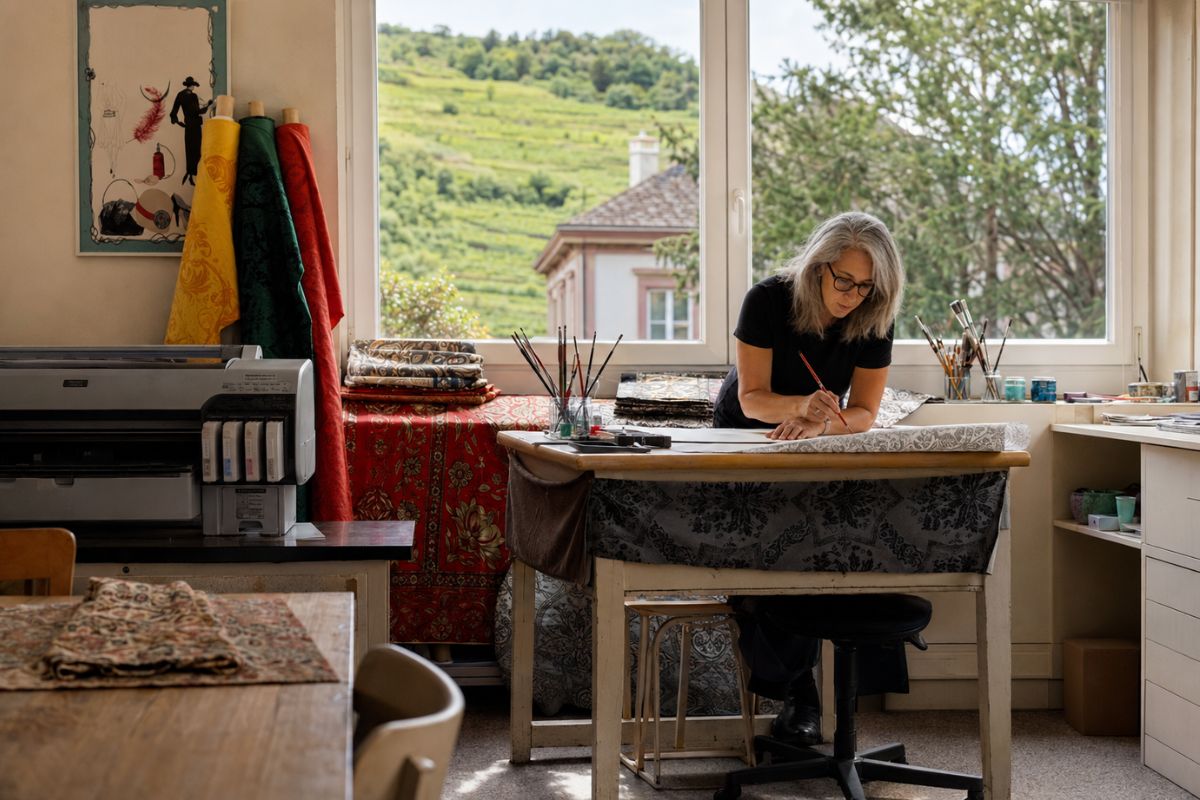
Every Beauvillé collection begins in the in-house design studio.
Inspired by decorative arts, nature, gardens, travel and the Manufacture’s textile archives, the motifs are traditionally drawn or painted by hand. Brushstrokes, subtle variations and material effects are deliberately preserved, giving each creation its distinctive character.
Once approved, the design undergoes extensive colour research. Each shade is carefully chosen to create a balanced composition and reveal the depth of the original artwork.
Colour separation and screen preparation
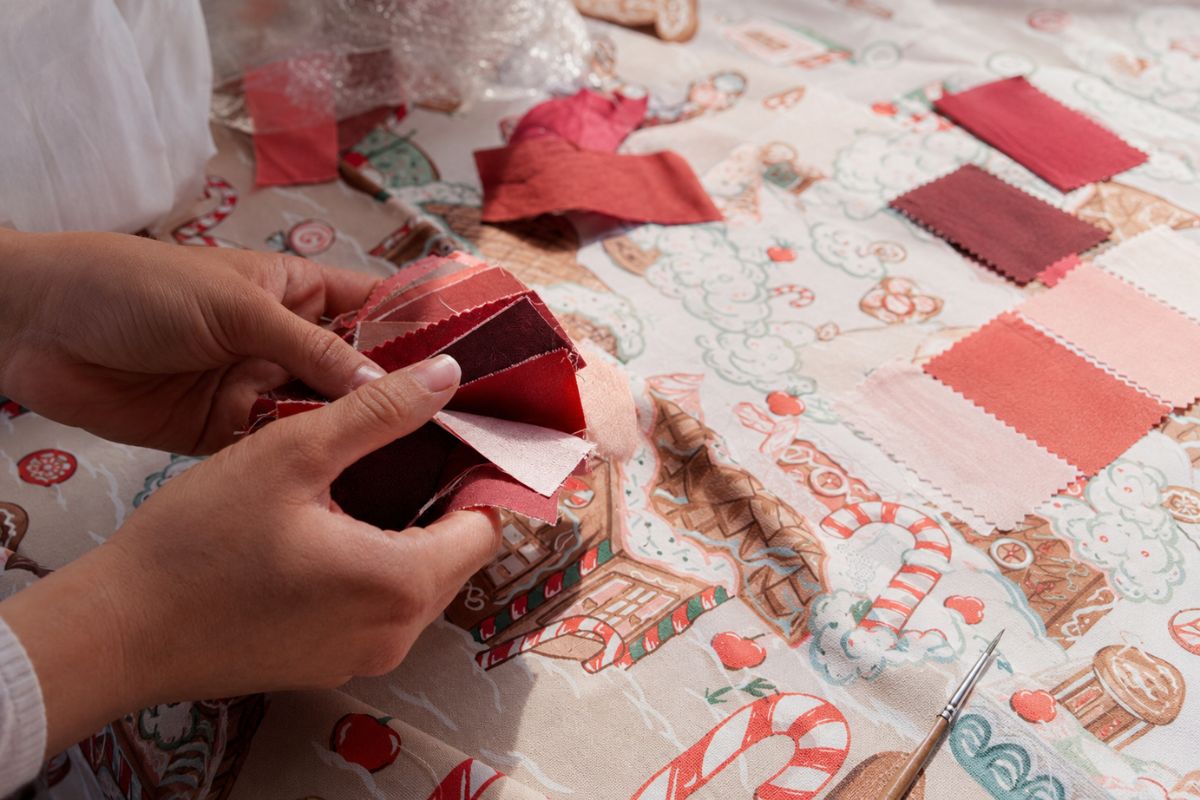
The design is then divided into its individual colours through a process known as colour separation.
Unlike four-colour printing, hand flat-screen textile printing requires a separate screen for every shade in the design. The most elaborate Beauvillé patterns may require more than twenty-five different colour separations.
Each colour is transferred onto a finely meshed polyester screen using a photogravure process. The screen acts as a highly precise stencil, allowing the dye paste to pass only through the areas corresponding to that particular shade.
Preparing the fabric before printing
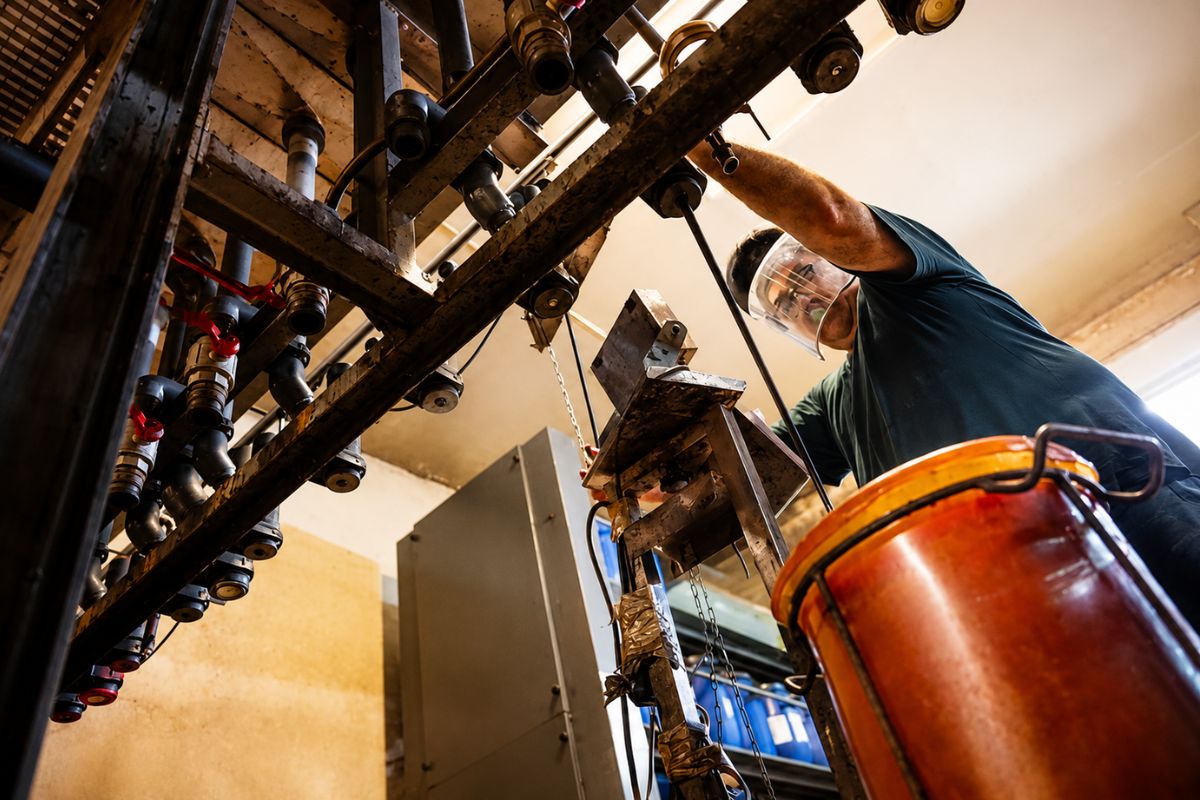
Beauvillé primarily works with woven cotton sateen, chosen for its smooth surface, luminous appearance and ability to reveal the richness of printed colours.
Before printing, the fabric undergoes several preparation stages. It is first singed at high speed to remove the tiny fibres protruding from its surface. This creates a smoother base and improves the sharpness of the future print.
The fabric is then bleached with hydrogen peroxide to achieve an even white ground before passing through a stenter. This machine places the fabric under controlled tension and realigns the warp and weft threads.
The accuracy of this preparation directly influences the geometry and registration of the final design.
Hand flat-screen printing
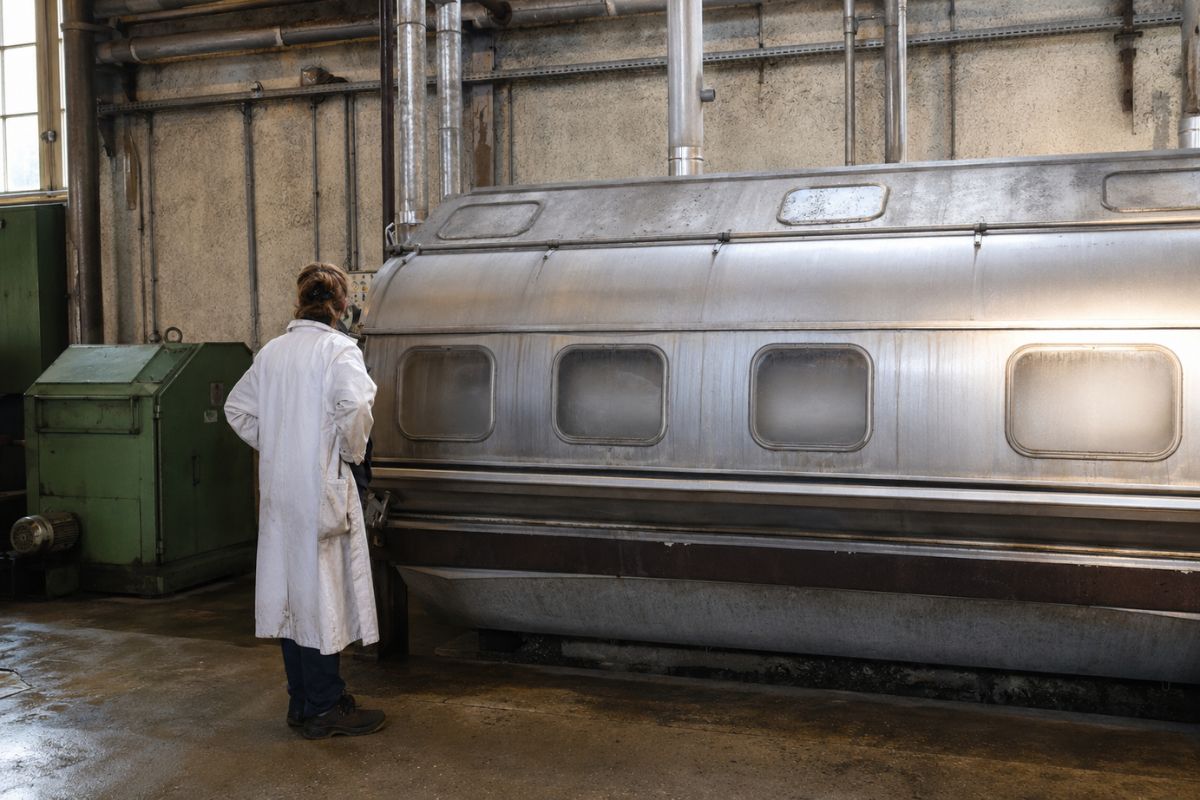
The prepared fabric is laid and temporarily secured on long printing tables extending over several dozen metres.
Two printers work simultaneously on either side of each screen. The dye paste is placed onto the mesh and manually drawn across it using a squeegee. Under the pressure of this movement, the colour passes through the open areas of the screen and penetrates the textile fibres.
Once the first colour has been printed, the next screen is positioned with extreme accuracy. The operation is repeated until every shade in the design has been applied.
Some Beauvillé tablecloths require more than twenty-five successive passes. Even the slightest misalignment could disturb the harmony of the pattern, making precision essential throughout the process.
Steaming: Fixing the colours within the fibres
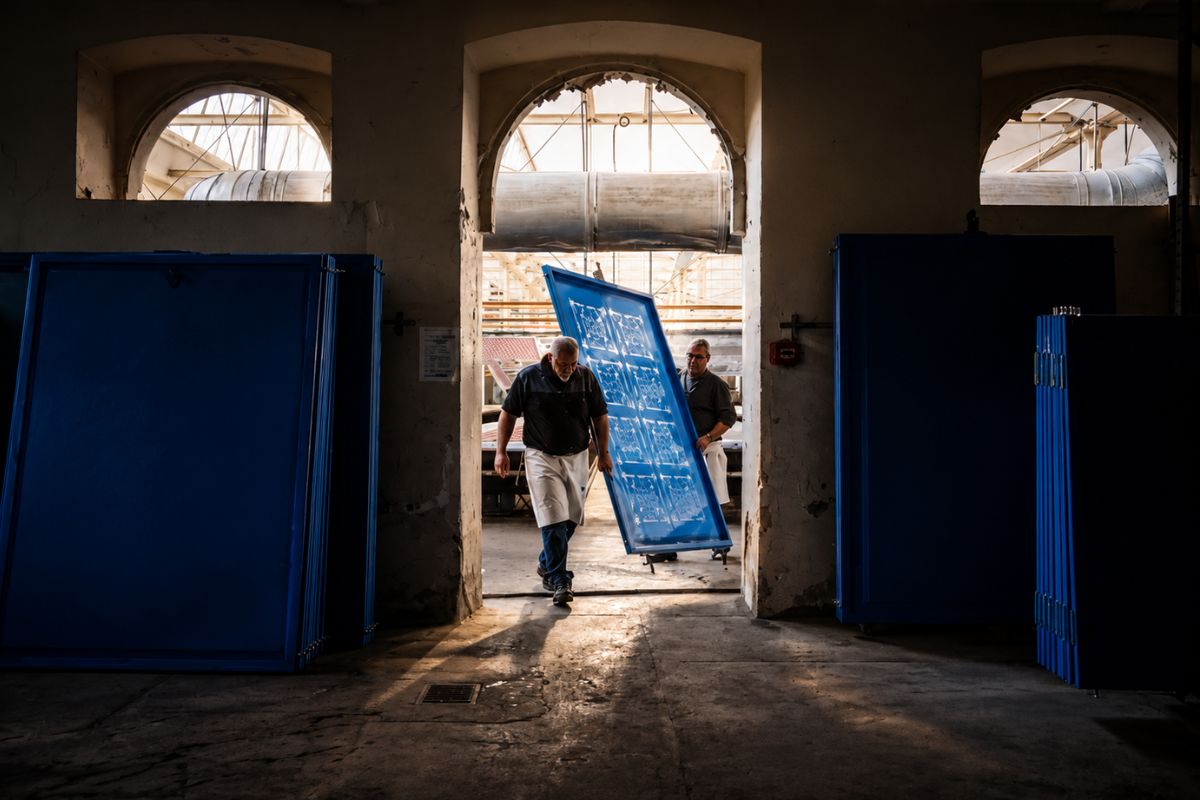
Once printing is complete, the fabric enters the steaming equipment.
During this stage, the textile is exposed to a steam-saturated atmosphere at a controlled temperature. The heat opens the cotton fibres while the moisture allows the dye molecules to migrate deep into the fabric.
Steaming is not simply a drying process. It chemically fixes the colours and contributes directly to their resistance to washing, light and everyday use.
Washing and finishing the printed fabric
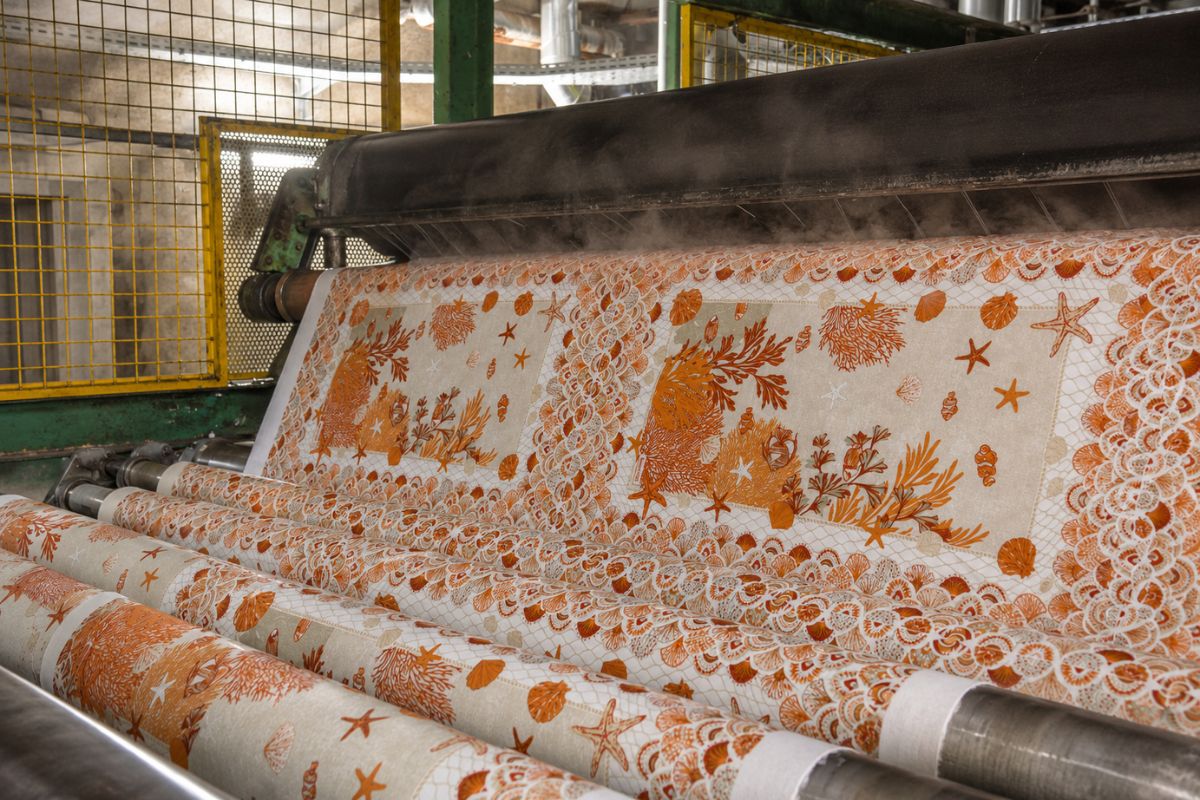
The printed fabric then passes through a series of finishing washes designed to remove any excess, unfixed dye.
The temperature and composition of each bath are adapted to the fabric and colours being used. These operations stabilise the fibres, enhance the softness of the textile and help ensure dimensional stability during future washing.
The result is a supple printed fabric whose colours have gained their full depth and clarity.
Straight-grain alignment
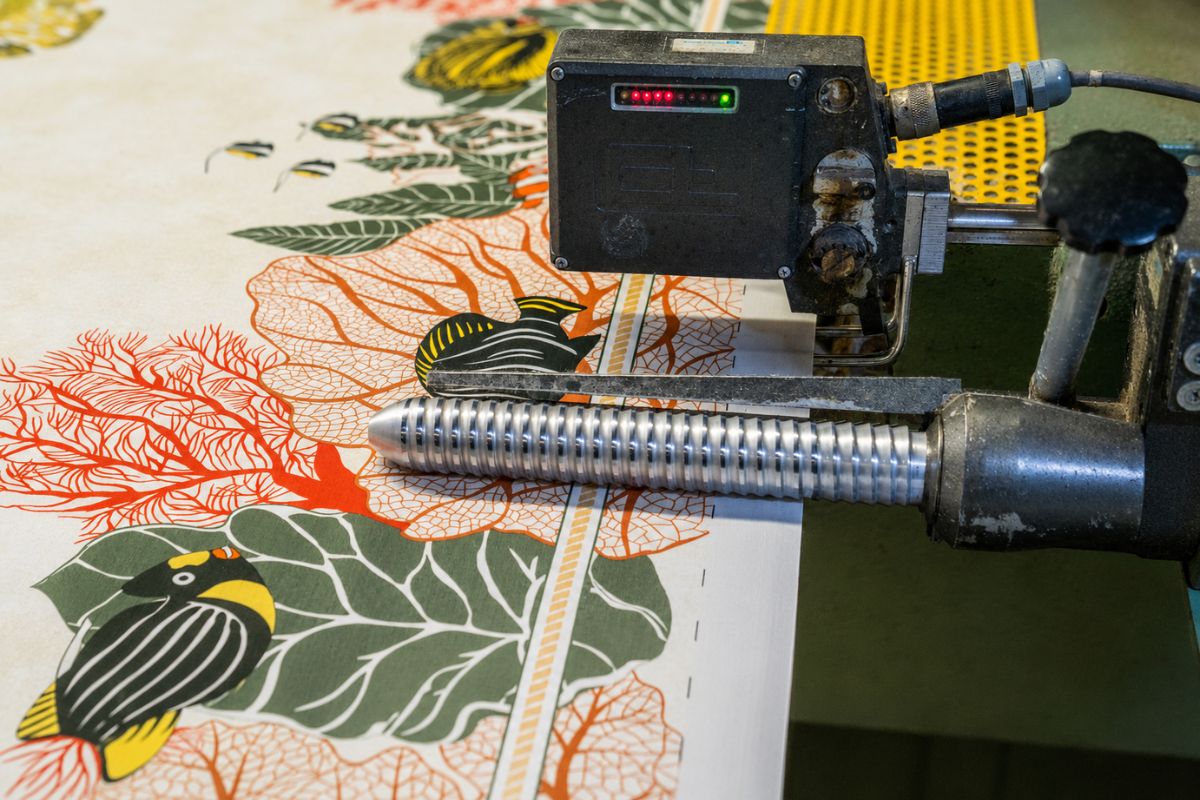
After hand printing, steaming and washing, the fabric undergoes straight-grain alignment.
This is a finishing stage and must not be confused with the printing process. The equipment carefully realigns the warp and weft threads so that the fabric lies perfectly straight before it is inspected and cut.
This precision is essential to achieving a balanced pattern, accurate dimensions and the impeccable drape expected of a Beauvillé tablecloth.
A meticulous quality inspection
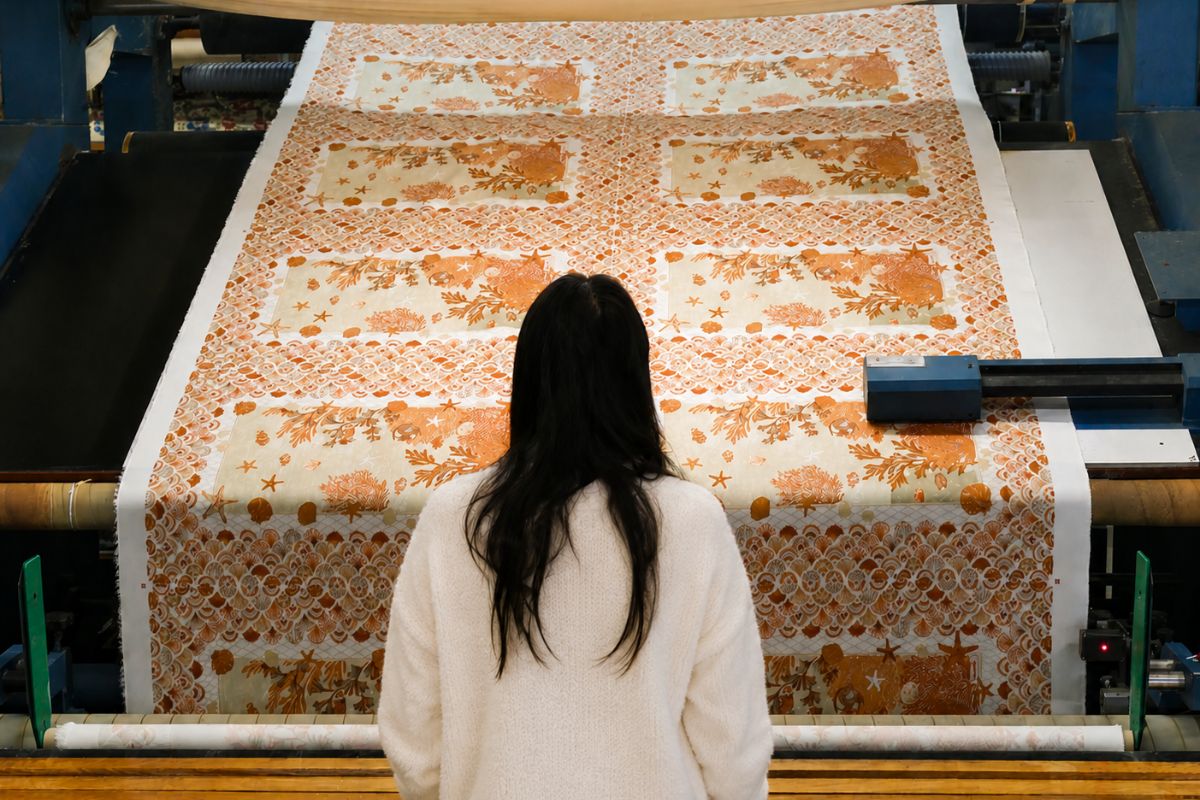
Every length of fabric is inspected individually before it enters the sewing workshop.
Our teams examine the consistency of the print, the alignment of the different colours, the accuracy of each shade, the quality of the weave and the dimensions of the fabric.
Any piece presenting an imperfection is removed from the production process. This meticulous inspection ensures that only textiles meeting Beauvillé’s standards continue to the next stage.
Cutting and sewing the tablecloth
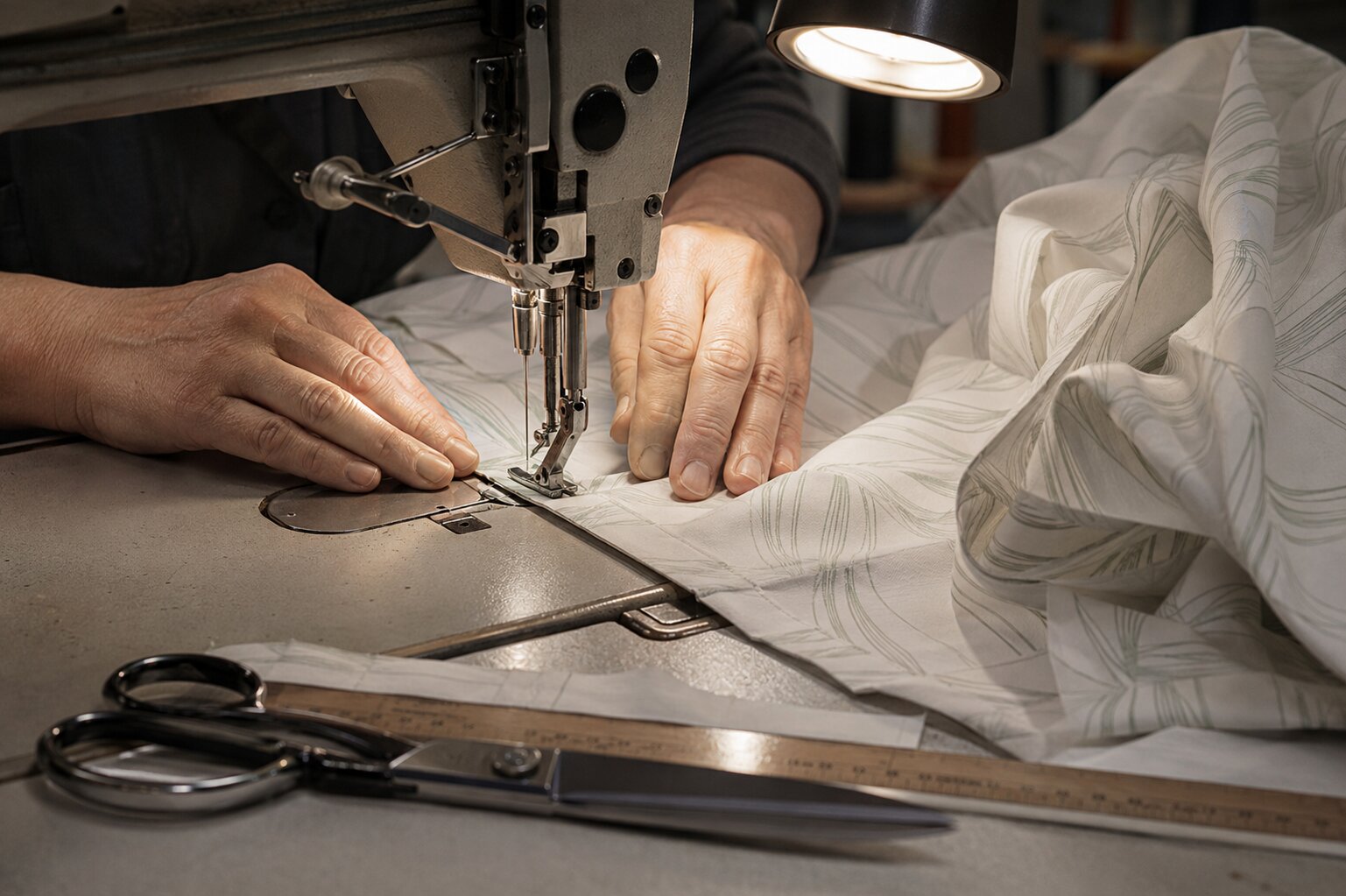
The inspected fabric is then carefully cut in our sewing workshop.
Particular attention is paid to the positioning of the design so that it remains perfectly centred on the finished tablecloth. The seamstresses create the hems, mitred corners and finishing details while preserving the visual continuity of the pattern.
Once sewing is complete, the tablecloth undergoes one final inspection. It is then ironed, carefully folded and prepared for dispatch.
French textile craftsmanship made to last
Creating a Beauvillé tablecloth requires far more than printing a pattern onto fabric. It brings together the skills of designers, colourists, screen engravers, printers, textile finishers, quality inspectors and seamstresses.
Preserving all these skills at the same site has become exceptional in Europe. It allows Beauvillé to create luxury table linen made in France while maintaining complete control over every stage of production.
Each tablecloth carries within it the precision of these gestures, the richness of French textile heritage and the desire to create pieces designed to accompany the most beautiful moments around the table.
es gestes précis. Une création pensée pour sublimer la table aujourd’hui et accompagner les instants précieux de demain.