


Beauvillé since 1839: The story of exceptional French textile craftsmanship
In Ribeauvillé, in the heart of Alsace, time has left a singular mark. For nearly two centuries, colors have met fabric, gestures have been passed down and patterns have come to life within a French textile manufacture whose history is closely linked to that of decorative printing.
Beauvillé draws its identity from this exceptional heritage. Behind its luxury table linens lies a story of innovation, artistry and transmission. The Manufacture’s origins reach back to 1756, but 1839 marked a decisive turning point with the arrival of Charles-Émile Steiner.
1756: the origins of the Manufacture
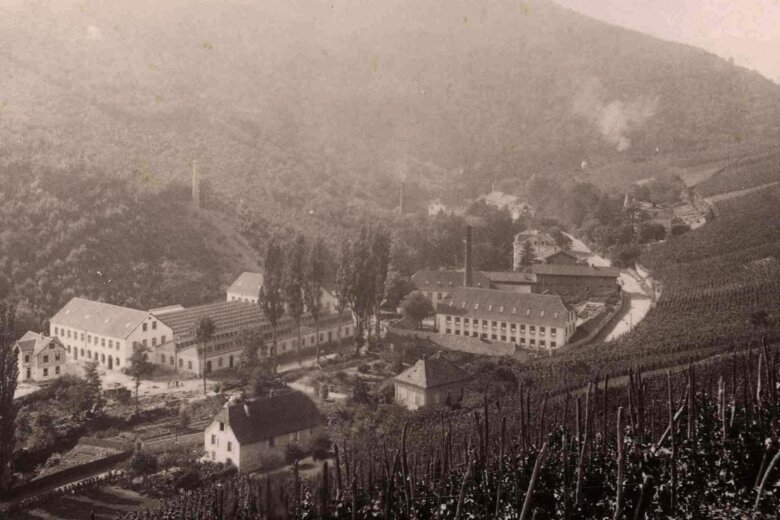
The story began in 1756, when Philippe Stephan founded a weaving and printing manufacture in Ribeauvillé. Alsace was already a major textile region, shaped by trade, technical knowledge and a remarkable mastery of color.
After Philippe Stephan’s death in 1778, the company changed hands several times. Its destiny entered a new era in 1839.
1839: Charles-Émile Steiner and Adrianople red
In 1839, Charles-Émile Steiner took over the dye works and introduced a process imported from England for producing the celebrated Adrianople red. Deep, luminous and exceptionally resistant, this red became one of the Manufacture’s signatures.
Its mastery required precision in both color preparation and fabric treatment. It already expressed a principle that would define the House for generations: combining technical research with aesthetic excellence.
1843: the art of block printing
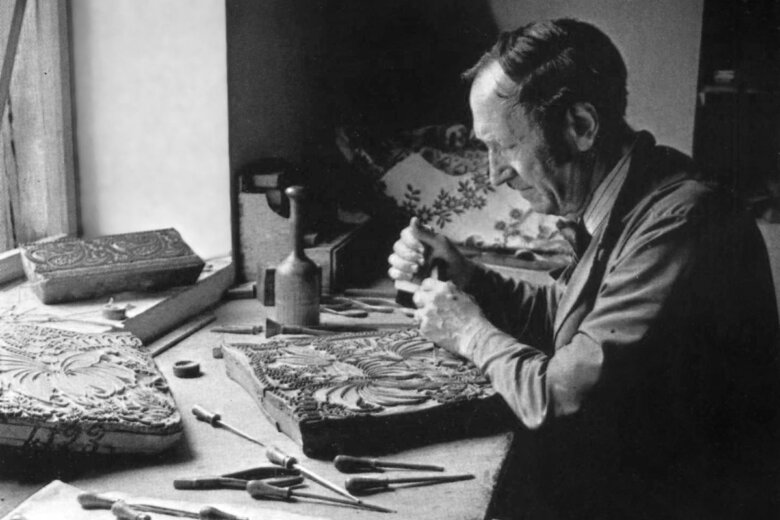
From 1843 onward, the Manufacture developed and perfected hand block printing. Each pattern was carved into wooden blocks and applied to the fabric one color at a time. A single composition could require hundreds of carefully aligned impressions.
This demanding technique brought remarkable depth and detail to the fabrics. The engraved blocks preserved in the archives remain invaluable witnesses to this period.
International recognition at the World’s Fairs
Throughout the nineteenth century, the Manufacture presented its work at major industrial and international exhibitions, receiving distinctions for the quality of its printing, the richness of its colors and the complexity of its designs.
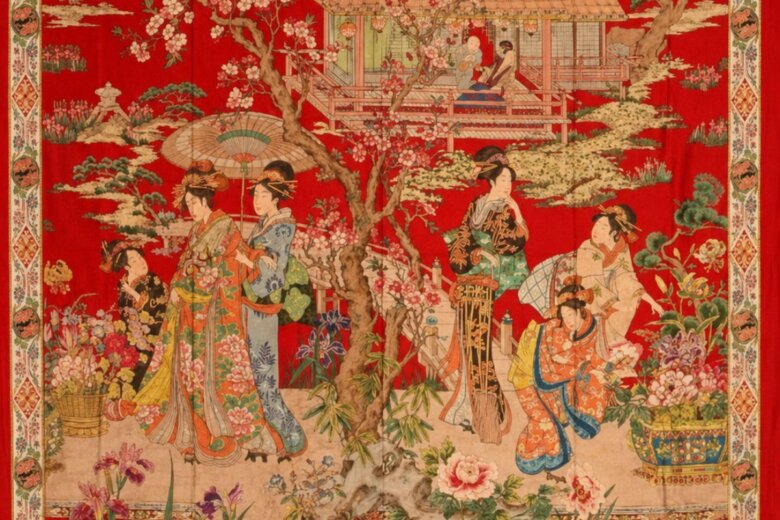
At the 1900 Paris World’s Fair, a spectacular Japanese panel created with 36 colors and 840 carved blocks won first prize. The achievement established the international reputation of the Ribeauvillé workshops.
The 1960s: flat screen printing, the Lyon technique
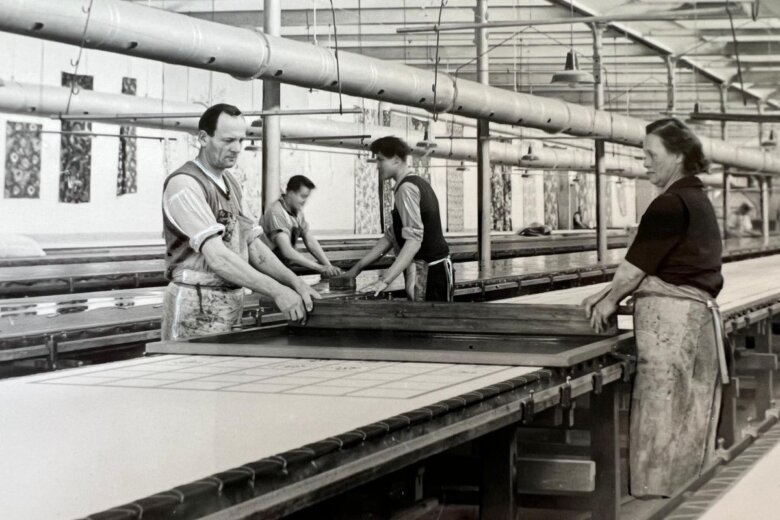
During the 1960s, textile printing evolved and the Manufacture developed flat screen printing using the Lyon technique. Each color continued to be applied separately through its own screen, positioned with great precision by the printer.
This method preserved the richness of the shades and the accuracy of the design while opening a new field of activity: printed table linens and home textiles. Hand flat screen printing remains central to the Manufacture today.
1980: preserving the workshops and shaping a new future
At the end of the 1970s, the French textile industry faced a profound crisis. Weakened by the slowdown in the furnishing market, the Charles Steiner Manufacture filed for bankruptcy in 1979.
A rescue operation in 1980 preserved the Ribeauvillé workshops, jobs and centuries-old skills. The company adopted the name Manufacture d’Impression sur Étoffes, or MIE. Arné Borin, a former executive of the Boussac group, led the restructuring and prepared the company for a new model beyond textile subcontracting.
The birth of Beauvillé
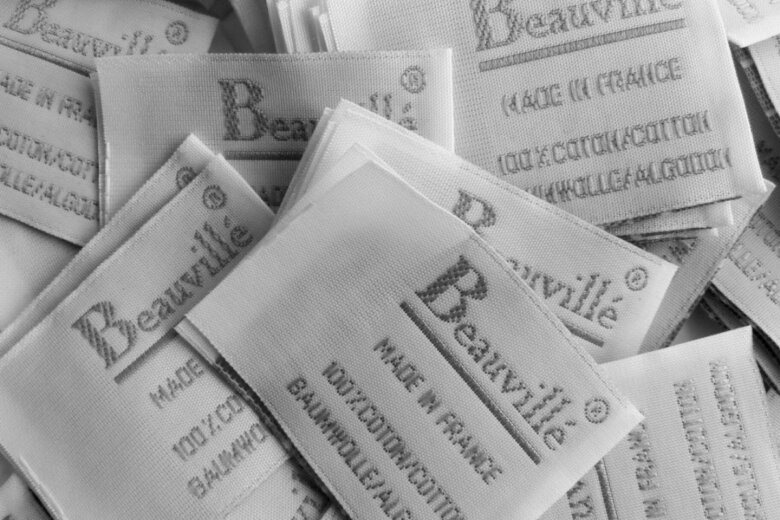
In the mid-1980s, Jean-Michel Borin and Martine Nourissat created a new editorial universe dedicated to table and home linens. Beauvillé was conceived to bring the Manufacture’s expertise directly into private interiors.
Jean-Michel Borin took control of the company in 1987. The Beauvillé trademark was registered in 1989 in France and later protected internationally. Tablecloths, cloth napkins, placemats, table runners and kitchen towels were designed, printed and made in Ribeauvillé. Topkapi became one of the House’s emblematic patterns, while a 1994 partnership with Dibbern extended selected Beauvillé designs to porcelain tableware.
Rare French craftsmanship preserved on one site
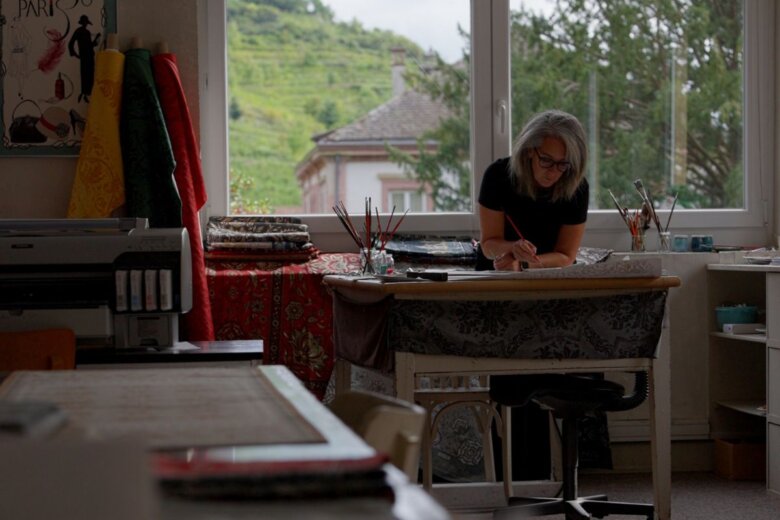
Beauvillé’s singularity lies in the concentration of rare skills in one place. Designers, colorists, engravers, flat screen printers, finishers, seamstresses and quality-control teams all contribute to each collection.
Beauvillé does not spin or weave cotton. Its expertise lies in design, color development, textile printing, finishing and sewing. Each color requires a separate screen and every passage must be perfectly aligned before the fabric can be finished, straightened, sewn and inspected.
This complete chain of expertise allows Beauvillé to create high-end French table linens entirely in Ribeauvillé.
2009: the living Heritage company label
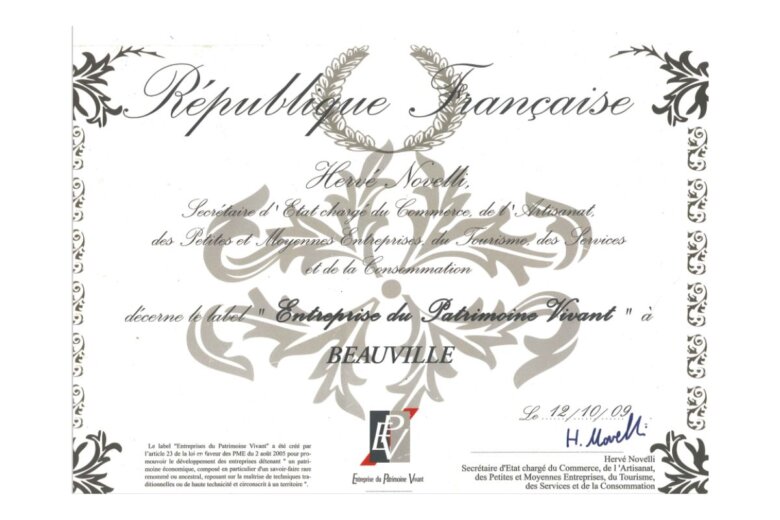
In 2009, the Manufacture received the Entreprise du Patrimoine Vivant, or Living Heritage Company, label. Awarded by the French State, it recognizes companies that preserve rare and exceptional artisanal or industrial skills.
The distinction honors both the mastery of textile printing and the Manufacture’s commitment to passing its knowledge on to future generations.
2023: a museum devoted to a living heritage
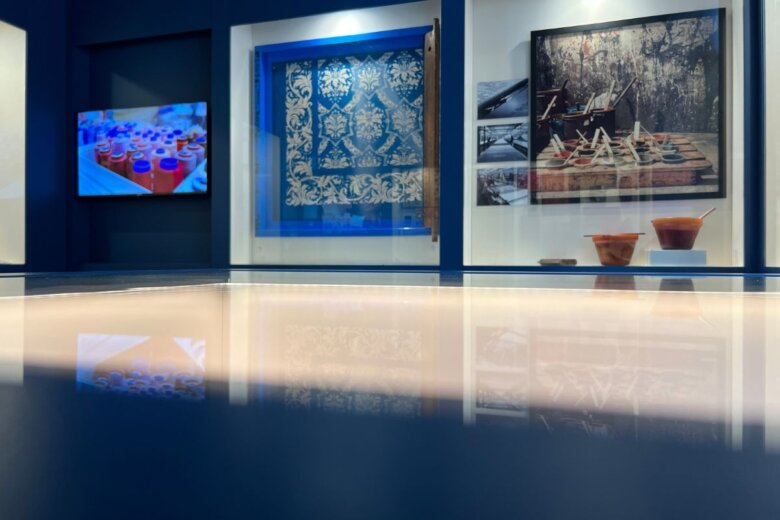
In 2023, Beauvillé opened a museum on its Ribeauvillé production site. Archives, printed fabrics, carved wooden blocks and historical tools retrace the evolution of textile printing from hand block printing to flat screens.
More than a place of remembrance, the museum celebrates a living heritage. The techniques it presents are not confined to the past: they continue to shape Beauvillé’s contemporary collections.
Beauvillé today: history brought to life through creation
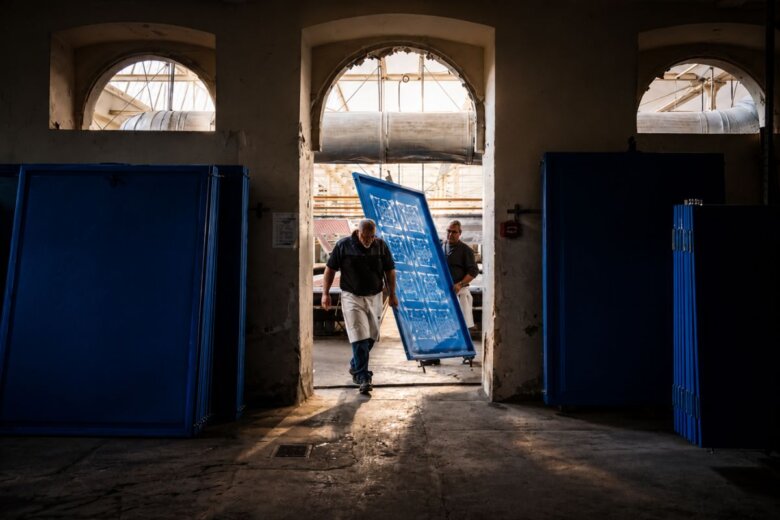
Today, Beauvillé continues to create collections in which heritage meets contemporary inspiration. Every tablecloth, napkin and accessory carries the memory of a place, a pattern and a human gesture.
Since 1839, techniques have evolved and styles have changed, yet one ambition remains: to create exceptional printed fabrics in Ribeauvillé, made to accompany interiors and tables through time.
At Beauvillé, history is not simply remembered. It is printed, one color at a time.